Spreadsheet to published article to Facebook ad, untouched.
Every advertised property gets an article, a page on the site and a Facebook ad, with one human step in the middle: the editor's read.
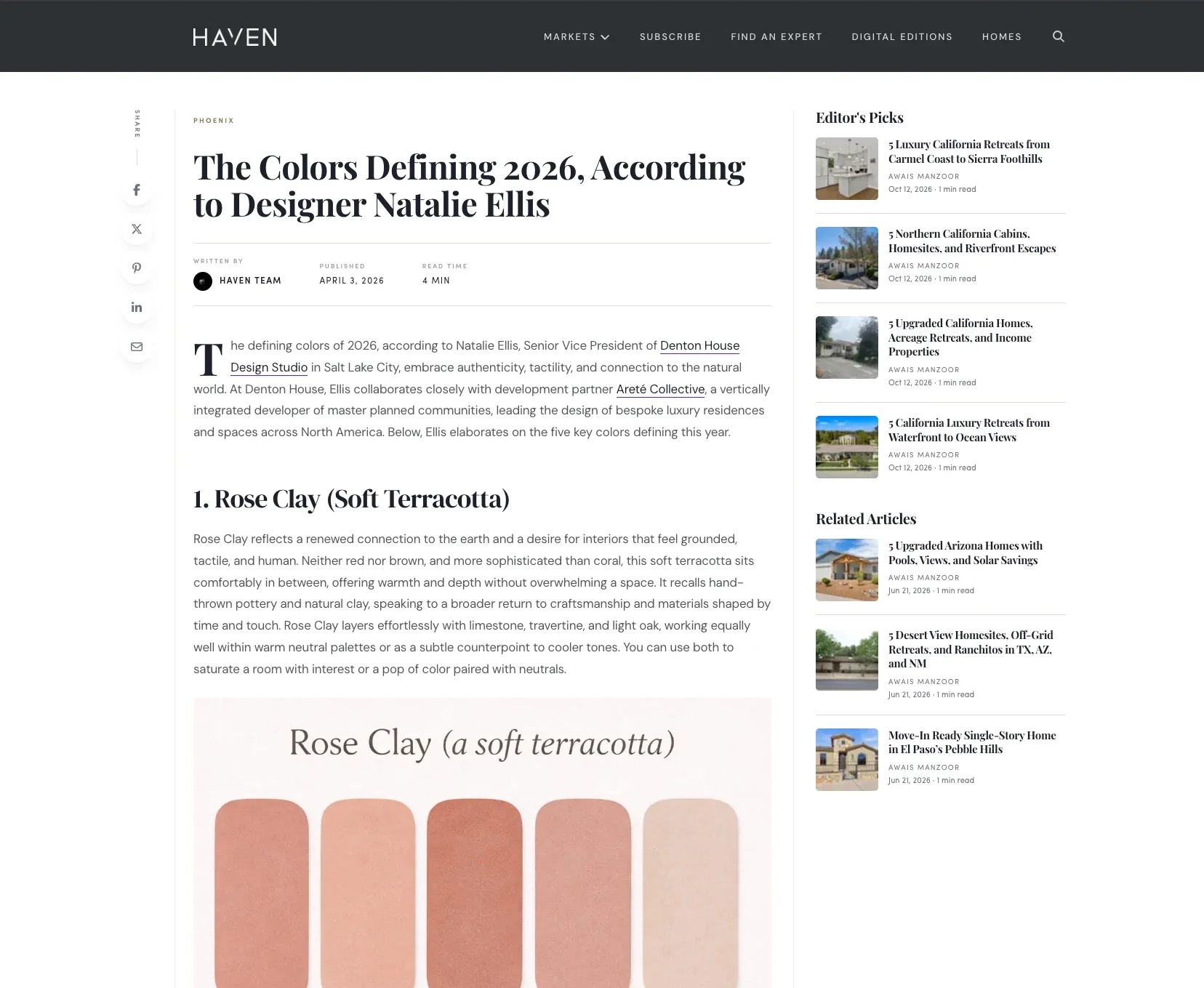
Writers and ops produced an article per advertised property by hand from a spreadsheet, posted it, linked it to the deal, and built the ads in Ads Manager. Issues shipped late or thin.
A Slack message starts the run. Drafts arrive in Google Docs for review, approved pieces publish and link themselves, and the campaign waits in Slack for a single approval.
Every property gets its article, without a writer
Reps used to wait on content for hundreds of listings per issue. Now the property sheet becomes drafted articles overnight, grouped by market and theme, ready for an editor's read rather than a writer's day.

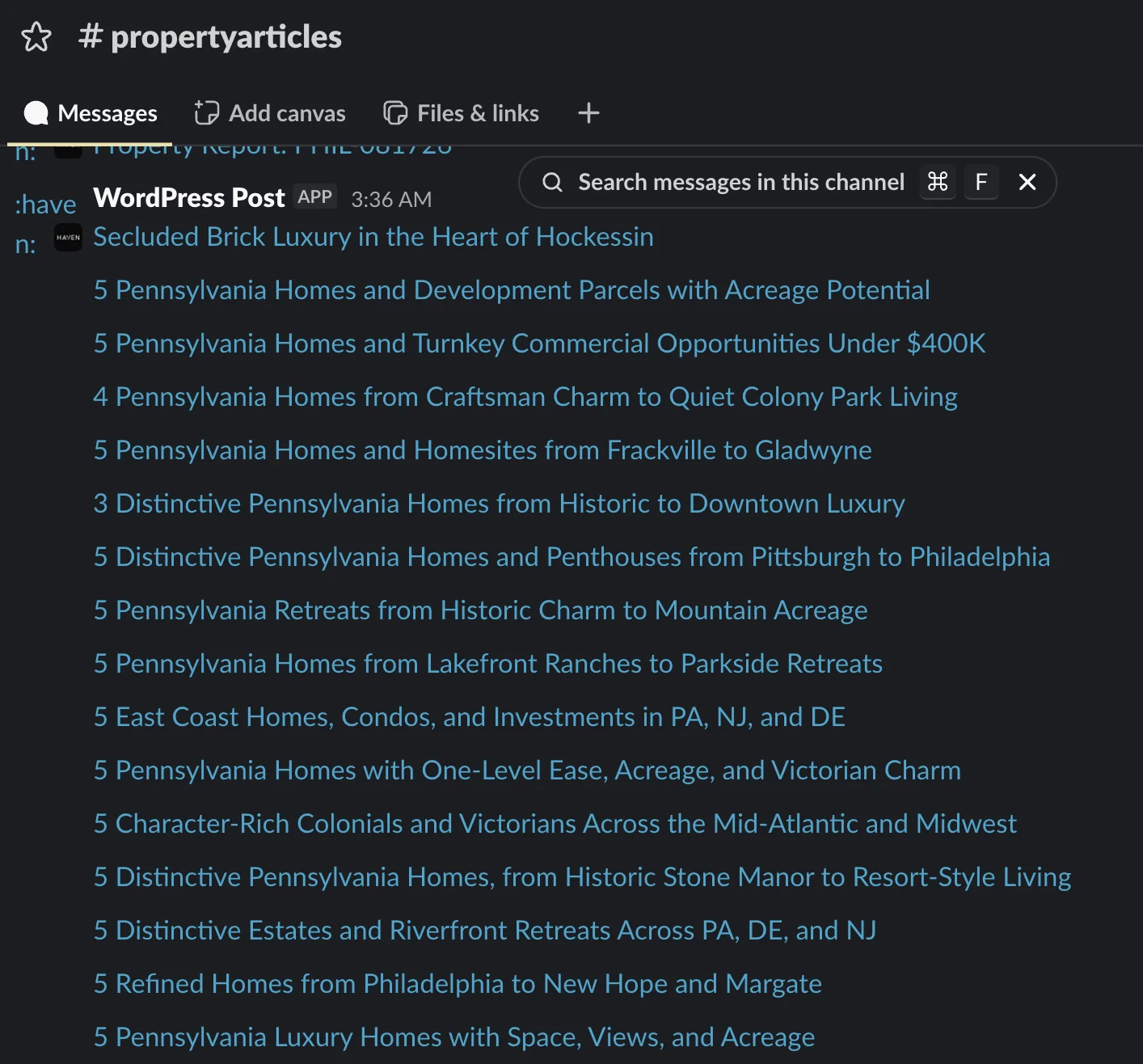
Published, linked, and announced
Approved drafts go to the site and link back to the deal in Salesforce. The team sees each post land in Slack the moment it is live, so no one opens WordPress to check.
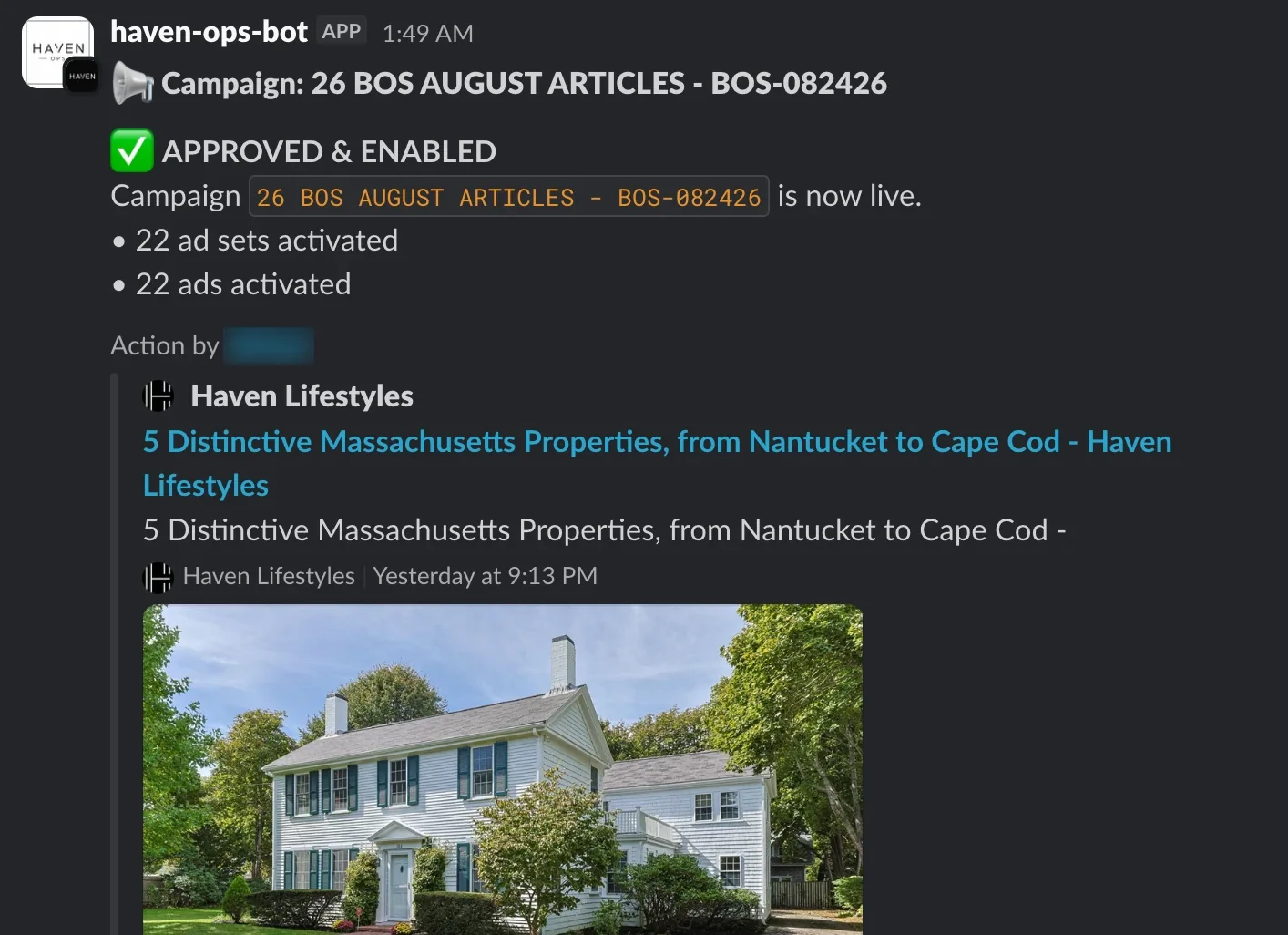
The ads go live on one click
Each issue's Facebook campaign is built from the published articles and waits in Slack for approval. One click and every ad set is live, with who approved it on record.
Results
- Articles published through the pipeline
- 10,000+
- Cost per article
- $80 → under $2
- Organic search traffic to articles
- +35% year on year
- Indexed pages on the site
- +10,000, one per listing
- Time from sheet to published issue
- 2 weeks → 2 days
- Campaign build time
- Hours → one click
“Ten thousand articles, each one a page Google can find and a reason for an advertiser to renew.”