Every advertiser sees what they got, the morning after.
A results page per advertiser, built automatically from Meta and Issuu, so proof of value arrives before the renewal call does.
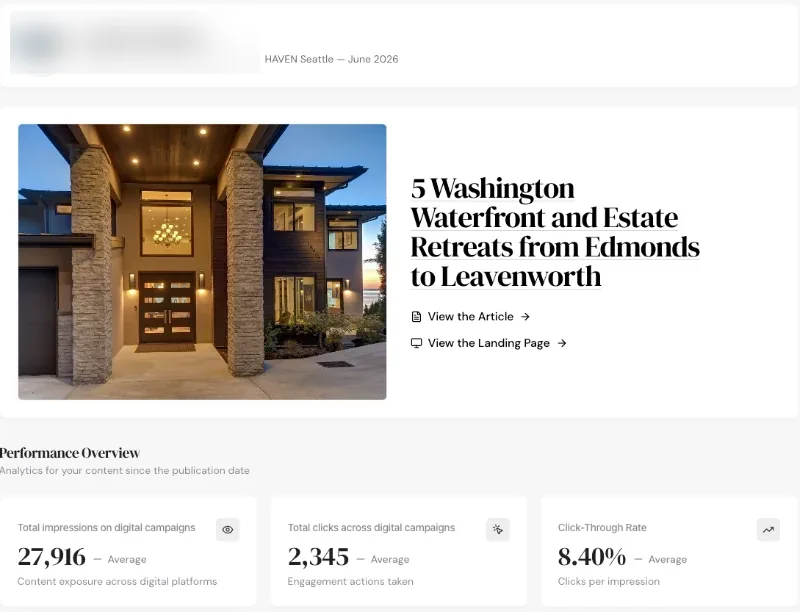
After each issue, staff pulled Facebook and Issuu screenshots into emails, one per advertiser, hundreds per issue. It took days, looked different every time, and had no history because the vendor API only exposes totals.
The pipeline builds the campaigns, snapshots the stats every day, checks each deal is complete, and sends every advertiser their own page. Nobody is emailed twice and nobody on the team touches it.
Every advertiser sees what their money did
The morning after an issue goes out, each advertiser gets a page with their own numbers: impressions, clicks, who saw the ad. No screenshots, no spreadsheet, no one on the team spending a week on it.
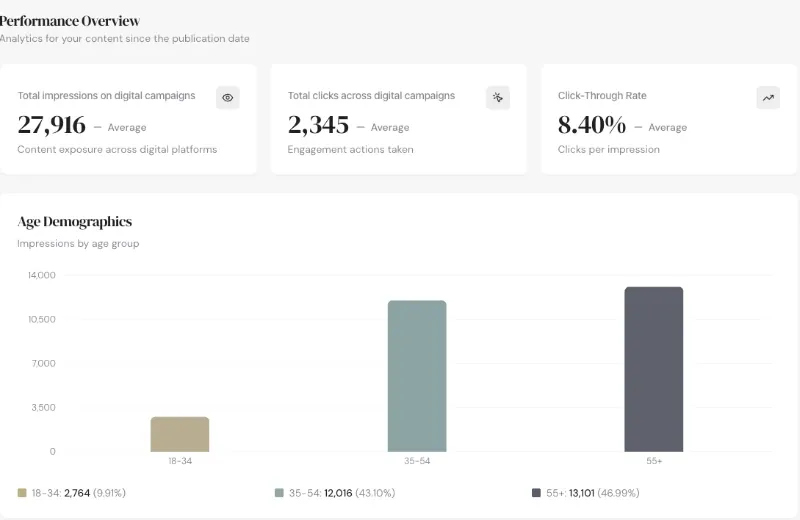
Print and digital in one story
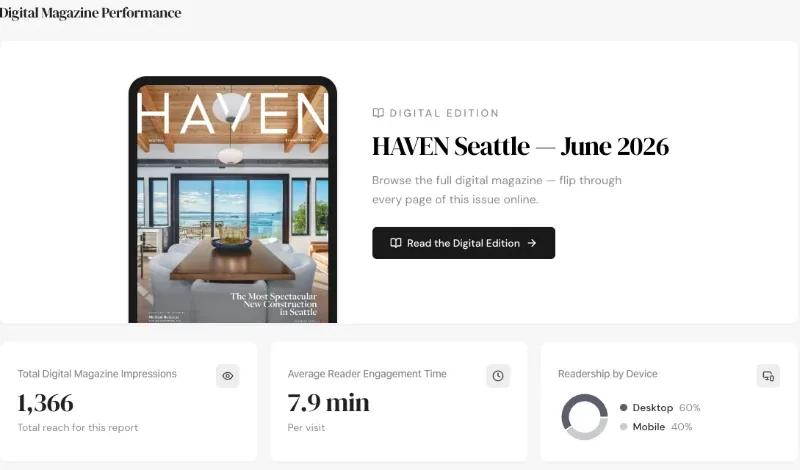
The magazine's own readership sits next to the ad results: how many read the issue, how long they stayed, on which device. The advertiser sees the whole reach they paid for, not just the Facebook half.
A history the platform never offered
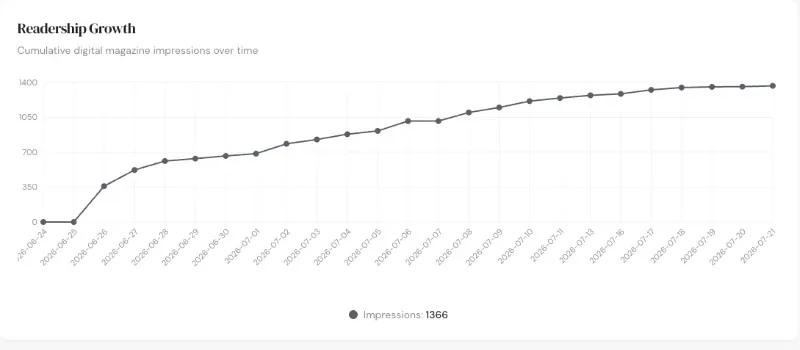
Issuu only reports totals. We snapshot every day, so the advertiser watches readership build over the four weeks after publication. That curve is the renewal conversation.
Campaigns launch from Slack
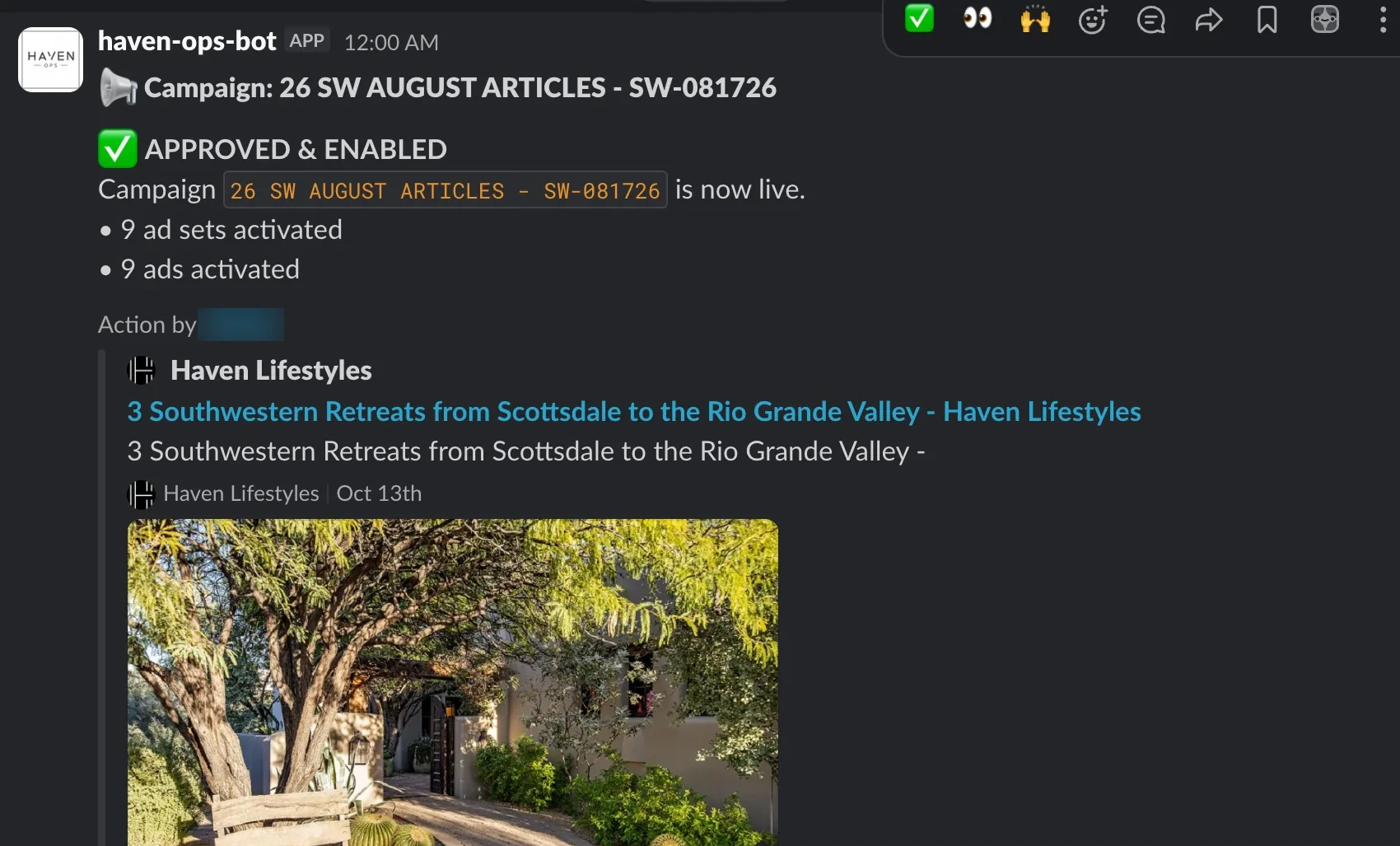
The Facebook campaign for each issue is built automatically from the published articles and waits in Slack. One click and every ad is live, logged with who approved it.
Results
- Reports per issue
- Hundreds, zero manual steps
- Markets covered
- 25+
- Staff time on reports per issue
- 2 days → 0
- Issue close to report in inbox
- Weeks → next morning
- Readership history
- Per day, 28 days after publication
- Advertisers emailed twice
- 0
“Customers who see what they got renew. The report is the opening line of the next sale.”